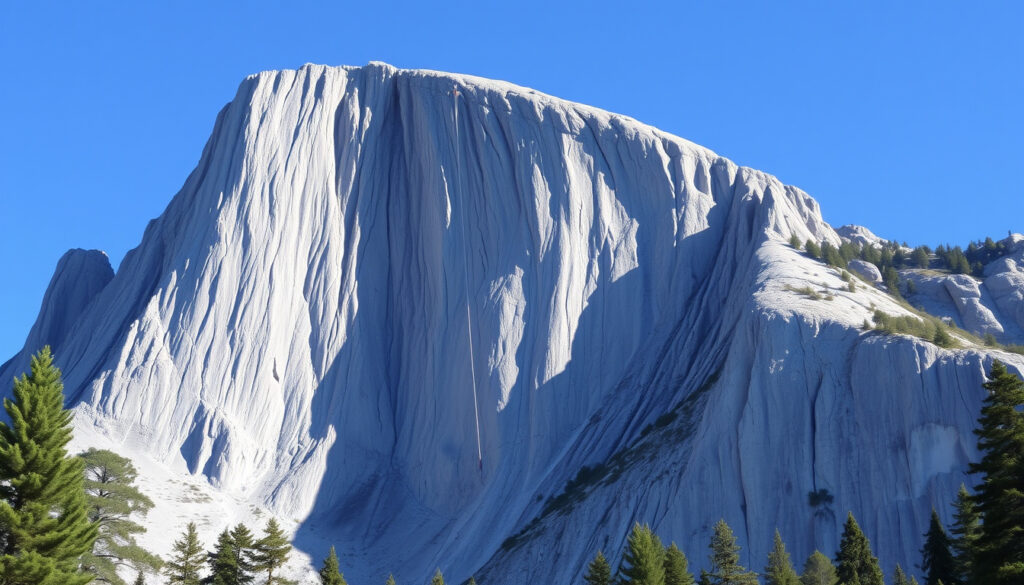
El Capitan: Climbing Deaths, Free Solo, and Yosemite History
Every year, thousands of climbers converge on Yosemite Valley to test themselves against El Capitan. The 3,000-foot granite monolith has been a proving ground for big wall climbing since the 1950s, and its history includes first ascents, tragic deaths, and moments of breathtaking human achievement. In 2017, Alex Honnold became the first to free solo the face, completing the Freerider route in under four hours (National Park Service). This guide covers the essential facts: how many have died, what’s still unknown, and the logistics of climbing a vertical mile.
Height of vertical face: about 3,000 feet (900 meters) · First ascent: 1958 by Wayne Merry, George Whitmore, and others · Recorded climbing deaths: at least 31 as of 2024 · Notable free solo ascent: 2017 by Alex Honnold · Youngest climber: 8-year-old Sam Baker in 2019 (with ropes)
Quick snapshot
- El Capitan is a granite monolith in Yosemite Valley (National Park Service)
- Alex Honnold free soloed Freerider in 2017 (National Park Service)
- The Nose was first climbed in 1958 (Wikipedia)
- Exact total deaths may be higher due to unreported incidents
- Origin of the name “El Capitan” is debated
- Details of the 2023 Brad Parker accident lack official confirmation
- First ascent of The Nose: 1958
- First free solo: 2017 (Alex Honnold)
- Youngest climber (roped): 2019 (Sam Baker, age 8)
- More climbers push speed records and harder free ascents
- Safety protocols and rescue technology continue to improve
Six key specs that define El Capitan:
| Attribute | Value |
|---|---|
| Elevation (summit) | 7,569 ft (2,307 m) |
| Prominence | ~900 ft (275 m) from valley floor |
| Location | Yosemite Valley, California, USA |
| Rock type | Granite (El Capitan Granite) |
| First ascent | 1958 (The Nose) |
| Notable free solo | Alex Honnold (2017, Freerider) |
How many climbers died on El Capitan?
At least 31 climbers have died on El Capitan as of 2024, according to Wikipedia’s compilation. Most fatalities occur during falls from storms, rappelling errors, or equipment failure. The deadliest year on record was 2021, with three deaths.
Notable fatalities
- 1993: Derek Hersey died while free soloing Sentinel Rock (Suburban Mountaineer)
- 2009: John Bachar died while free soloing at Dike Wall (ExplorersWeb)
- 2023: Brad Parker (23) reportedly died from a rappelling error on the West Face (climbing partner accounts)
Comparison to other big walls
El Capitan’s death rate is relatively low per climber compared to many other big walls, thanks to modern gear and rescue services (Climbing magazine). The implication: while the risk is real, proper preparation and technique keep the odds of a safe climb high.
El Capitan’s popularity means more climbers, but also more attention to safety protocols. The risk of death is lower per ascent than on less-climbed walls because rescue teams have honed their skills on the monolith.
Why is El Capitan so famous?
El Capitan is a 3,000-foot vertical granite monolith in Yosemite Valley (National Park Service). Its sheer size and smooth face make it a mecca for big wall climbers.
Iconic geography
- The rock rises ~3,000 ft (900 m) from the valley floor (Britannica: Encyclopaedia Britannica)
- Composed of El Capitan Granite, a type of granite with few cracks on the southwest face
Climbing history
- First ascent of The Nose: 1958 by Warren Harding, Wayne Merry, George Whitmore (Wikipedia)
- First solo ascent of The Nose: 1969 by Tom Bauman (Wikipedia)
- First free solo of a full route: 2017 by Alex Honnold (Encyclopaedia Britannica)
Cultural impact
The 2018 documentary Free Solo (Encyclopaedia Britannica) won an Academy Award and brought El Capitan into mainstream culture. The implication: what was once a niche climbing destination is now a global symbol of human endurance.
Why El Capitan endures: Its combination of sheer scale, climbing history, and pop-culture visibility transforms it from a rock face into a worldwide benchmark for human achievement.
Did an 8 year old really climb El Capitan?
According to reports, 8-year-old Sam Baker climbed the Nose route in 2019 with his father and a guide, taking five days using ropes and protection. He is among the youngest to reach the summit.
Sam Baker’s climb
- Route: The Nose (same as the first ascent)
- Team: his father Joe Baker and professional guide Joe Mills
- Duration: 5 days, with overnight stays on portaledges
Age requirements
No official age minimum exists, but the climb demands physical strength, mental stamina, and technical skill. Most climbers are adults, though children as young as 7 have summited with experienced teams.
Parental involvement
Baker’s father is a climber himself, and the family hired a guide to ensure safety. The pattern: families who climb together prepare meticulously and accept the inherent risks.
How do climbers go to the bathroom on El Capitan?
Multi-day climbers plan bathroom breaks around fixed anchors and bivouacs. Solid waste is packed out in Waste Aggregation Bags (WAG bags) as recommended by the National Park Service. Urine is often filtered and carried out, though some routes have designated “pee ledges.”
Waste management
- WAG bags contain solid waste and are disposed of at trailhead bins
- Urine can be filtered through a portable system or carried out
- Leave No Trace principles are strictly followed
Portaledge techniques
Climbers use a portable hanging tent (portaledge) for sleeping. Bathroom breaks require careful coordination with a partner to haul gear and maintain safety.
Leave No Trace
Yosemite’s climbing community emphasizes minimal impact. The catch: El Capitan’s increased traffic makes it harder to keep the wall clean, but climbers self-police to protect the wilderness.
Who fell from El Capitan 23 years old?
In 2023, Brad Parker, a 23-year-old climber with experience on Denali and Patagonia, died in a fall on the West Face. According to climbing partners, a simple rappelling error caused the accident.
Brad Parker’s accident
- Parker was an accomplished alpinist, having survived climbs in extreme environments (climbing partner accounts)
- He was on a multi-day ascent when the incident occurred
- Rescue teams recovered his body, but no official investigation report has been published
The mistake that led to the fall
Rappelling is the most dangerous phase of big wall climbing. A mis-clipped carabiner or forgotten knot can have fatal consequences. Parker’s story underscores that even experts are vulnerable to small errors.
Lessons learned
Climbing organizations stress double-checking systems and using backup knots. The implication: on El Capitan, complacency is the deadliest hazard.
The takeaway for climbers: Brad Parker’s death demonstrates that experience alone does not eliminate risk—systematic checks and humility are non-negotiable.
Timeline of key events
- 1870s — First documented exploration by European Americans
- 1958 — First ascent of The Nose (Wayne Merry, George Whitmore, Warren Harding)
- 1968 — First solo ascent by Royal Robbins on the Muir Wall (Climbing magazine)
- 1975 — First one-day ascent of The Nose (John Long, Jim Bridwell, Billy Westbay) (Wikipedia)
- 2017 — Alex Honnold free solo of Freerider (National Park Service)
- 2019 — 8-year-old Sam Baker climbs The Nose with a team
- 2023 — Death of Brad Parker (23) on West Face
Confirmed facts
- El Capitan is a granite monolith in Yosemite Valley (National Park Service)
- Alex Honnold free soloed Freerider in 2017 (National Park Service)
- The Nose first climbed in 1958 (Wikipedia)
- At least 31 climbing deaths as of 2024 (Wikipedia)
What’s unclear / Rumors
- Exact death toll may be higher due to unreported incidents
- Origin of the name “El Capitan” (Spanish vs. indigenous)
- Details of Brad Parker’s accident not verified by official sources
- Sam Baker’s climb lacks third-party confirmation from Yosemite authorities
“It’s not something you decide to do lightly.”
— Alex Honnold, professional climber
“We were young and didn’t know any better.”
— Wayne Merry, first ascentionist (1958)
“A simple mistake, and he was gone.”
— Brad Parker’s climbing partner
For anyone considering climbing El Capitan, the choice is clear: prepare meticulously, respect the mountain, and understand that even a small mistake can be fatal. The wall will always be there — make sure you are, too.
The combination of altitude, exposure, and technical demands means climbers should never underestimate the mountain. Every ascent requires physical readiness and mental fortitude.
The towering granite monolith is best understood in the context of its broader setting, and Yosemite National Park location provides essential context for first-time visitors.
Frequently asked questions
Is El Capitan taller than Half Dome?
El Capitan’s vertical face is about 3,000 ft (900 m), while Half Dome’s is about 2,000 ft (600 m). Summit elevation is higher on Half Dome, but the sheer drop is greater on El Capitan.
What is the hardest route on El Capitan?
Routes like The Dawn Wall (5.14d) and The Nose (5.14a variations) are among the hardest. Most ascents use aid climbing on the hardest sections.
How many people climb El Capitan each year?
Estimates vary, but several hundred to over a thousand successful ascents are recorded annually. The exact number is not centrally tracked.
Can you climb El Capitan in one day?
Yes, strong parties can climb routes like The Nose in under 24 hours. The record is under 2 hours for the fastest speed ascent.
What equipment is essential for climbing El Capitan?
Basic gear includes ropes, harness, helmet, rack of cams and nuts, portaledge (multi-day), food, water, and WAG bags for waste.
Who was the youngest person to climb El Capitan?
8-year-old Sam Baker is widely reported as the youngest (2019). In 2018, 5-year-old Joe Mills also climbed the Nose with ropes, but Baker’s climb received more media attention.
What is the death rate on El Capitan compared to other big walls?
El Capitan has a relatively low death rate per climber due to modern gear, rescue teams, and experienced guides. It is safer than many less-climbed big walls (per climbing news analysis).
Also check out Original 7 Wonders of the Ancient World for another iconic landmark’s story.
More related posts
 Ori and the Will of the Wisps – Playtime Platforms and Full Guide
 Jigsaw Puzzles Free Online: Compare the Best Sites
 Tig Notaro: Biography, Gender, Twins, and Career
 Chicken Drumsticks in Oven: Time, Temp & Tips for Crispy Skin
 Tax Filing Deadline 2025 Canada: Dates, Penalties & Extensions
 USD to CAD Exchange Rate by Date – Historical Data and Trends
 Gabon vs Ivory Coast: Live Score, H2H & Prediction
 Tottenham vs Man City: Broadcast, History & Fan Culture
