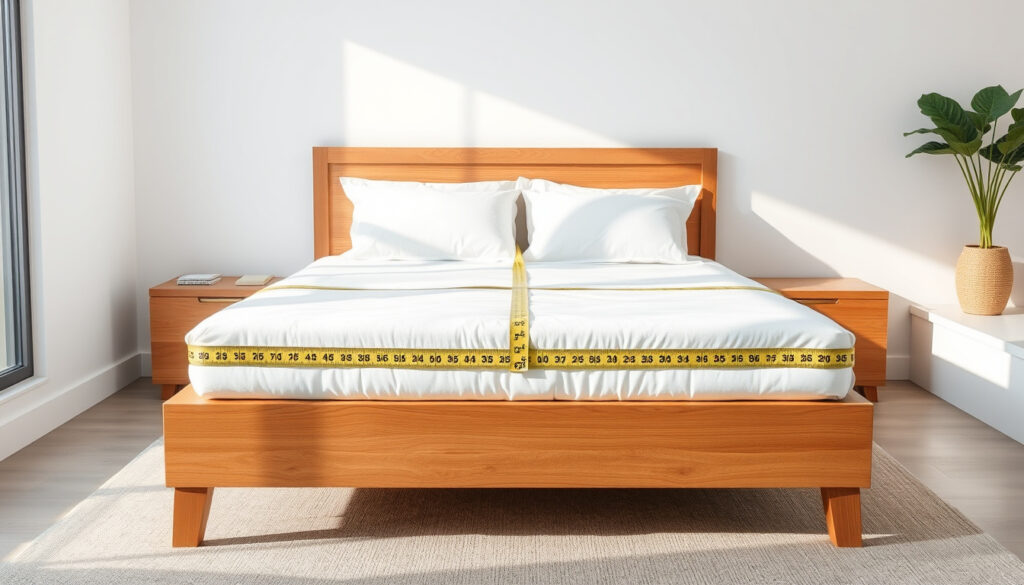
What Is the Width of a Queen Bed? 60 Inches (152 cm)
If you’ve ever ordered bedding internationally only to find it doesn’t fit, you’re not alone. The confusion around queen bed dimensions comes from a quirky naming mismatch: what Americans call a “queen,” the UK and Ireland call a “king”—and the measurements don’t quite line up either. This guide cuts through the marketing language to give you exact widths in inches, centimeters, and feet, plus how the standard compares across regions and why it matters when furnishing a room or buying online.
Standard US Queen Width: 60 inches (152 cm) · Standard US Queen Length: 80 inches (203 cm) · UK King Width: 60 inches (193 cm)
Quick snapshot
- US Queen: 60 inches (152 cm)
- UK/Ireland King: 60 inches (152 cm)
- UK/Ireland Double: 54 inches (135 cm)
- US King: 76 inches (193 cm)
- Olympic Queen: 66 inches wide, 6″ wider than standard (Bassett Furniture)
- Short Queen: 60 × 75 inches (RV use) (Bassett Furniture)
A standard queen-size mattress measures 60 inches wide by 80 inches long, according to Dimensions.com (Dimensions.com). This translates to 152 centimeters by 203 centimeters in metric units. The queen bed is the most popular mattress size in America, purchased by more households than any other dimension according to Nectar Sleep (Nectar Sleep).
In inches, a queen bed is exactly 60 inches wide. This is the starting point for understanding any regional variation or comparison to other sizes. Multiply the width by the length (80 inches) and you get a surface area of approximately 33.33 square feet, as documented by Dimensions.com (Dimensions.com).
In centimeters
Converting to centimeters gives you 152 cm wide by 203 cm long. Most US retailers round this to the nearest centimeter (152 × 203 cm), while European sources often list it as 152.4 × 203.2 cm, per Turmerry’s international guide (Turmerry). The difference is negligible for purchasing decisions—your fitted sheet will fit either way.
In feet
At 5 feet wide, a queen bed’s width equals exactly 5 feet (60 inches ÷ 12). The length works out to approximately 6.67 feet. This makes it easier to visualize when planning bedroom layouts or comparing to room dimensions.
Is a queen bigger than a king size bed?
No. The American king-size bed is significantly wider than a queen. A US king measures 76 inches wide compared to the queen’s 60 inches—a 16-inch difference that translates to nearly 41 centimeters, according to Bassett Furniture’s comparison guide (Bassett Furniture). The king is not taller or longer; it simply offers more horizontal sleeping space.
The dimensions reveal the key trade-off between these two sizes. Here’s how they compare across measurement systems:
| Bed size | Width (inches) | Width (cm) | Length (inches) |
|---|---|---|---|
| US Queen | 60 | 152 | 80 |
| US King | 76 | 193 | 80 |
| Difference | +16 | +41 | 0 |
What many shoppers don’t realize is that the king and queen share the same length at 80 inches. The width difference is where couples notice the trade-off: the king provides each sleeper with 38 inches of personal space versus 30 inches on a queen.
Overall size difference
When you add up the total surface area, a king bed offers about 40% more sleeping space than a queen. The queen at 33.33 square feet versus the king’s roughly 42 square feet means noticeably more room—but also a heavier mattress and a frame that needs more floor space. Master bedrooms of 12 feet by 12 feet or larger typically accommodate a king comfortably; smaller rooms may feel cramped.
The US King (76″) is dramatically wider than the UK King (60″). If you’re comparing international listings, the naming overlap hides a significant size gap—always check exact measurements.
Is a queen larger than a double?
Yes, and the difference is meaningful for couples considering whether to upgrade. A US queen is 6 inches wider than a standard double at 60 inches versus 54 inches, according to Bassett Furniture (Bassett Furniture). The length difference is smaller but still notable: 80 inches versus 75 inches.
This table shows how the queen stacks up against standard double sizes across regions:
| Bed size | Width (inches) | Width (cm) | Length (inches) | Length (cm) |
|---|---|---|---|---|
| US Queen | 60 | 152 | 80 | 203 |
| US Double (Full) | 54 | 137 | 75 | 190.5 |
| UK/Ireland Double | 54 | 135 | 75 | 190 |
In practical terms, a double provides about 28 square feet of sleeping surface while the queen delivers 33.33 square feet—a 19% increase. For two adults, that extra space often determines whether both can sleep comfortably without disturbing each other.
Standard double size
The “double” name originates from early 20th-century bedding when doubles were designed to accommodate two people with less space than modern standards expect. Today, most adults find a double too narrow for two—it’s why the queen became the most popular choice for couples. A single adult on a double has generous room for stretching out, but sharing becomes a compromise.
Queen vs double dimensions
The 6-inch width gap matters most at the shoulder level where two bodies meet. On a double, each sleeper effectively has 27 inches—about the width of a crib mattress. On a queen, each gets 30 inches, closer to a standard twin. This 3-inch per-person difference explains why couples frequently upgrade from double to queen but rarely downsize from queen to double.
The UK double (135 cm) is narrower than the US double (137 cm). International shoppers should note this 2 cm difference when buying bedding across regions—it won’t prevent fitting, but sheets labeled for UK double may sit slightly loose on US frames.
What size is a queen size bed in Ireland?
Here’s where things get confusing: Ireland has no standard “queen” size. What Americans call a queen, Irish and UK retailers list as “king size.” The Irish king measures 60 inches wide by 78 inches long (152 × 198 cm), per Dochara’s accommodation guide (Dochara). The widths match exactly—the only difference is 2 inches of length.
This naming mismatch stems from independent regional standardization efforts rather than any international coordination. Here’s how the sizes line up:
| Region | Size name | Width | Length |
|---|---|---|---|
| USA | Queen | 60 in / 152 cm | 80 in / 203 cm |
| UK | King | 60 in / 152 cm | 78 in / 198 cm |
| Ireland | King | 60 in / 152 cm | 78 in / 198 cm |
Get Laid Beds, a UK bed retailer, confirms this sizing overlap: “It’s a common misconception that the Queen bed is a UK size, but this isn’t the case,” they note in their comparison guide (Get Laid Beds).
Irish equivalents
The Irish bedding market typically uses UK sizing conventions. An Irish consumer looking for a “queen” would need to request a king and accept the 5-centimeter length reduction. Some specialty retailers now stock “American queen” sizes to accommodate US expats or online shoppers, but these aren’t standard in most Irish stores.
UK comparisons
UK bedding labeled for king-size beds will fit an American queen frame in width (both are 152 cm) but may fall 5 cm short in length. Foxford confirms that UK king duvets work on US queen mattresses for this reason (Foxford). The practical fix: look for duvet covers labeled for “US Queen” or “Queen” without a country prefix.
Can two people sleep on a queen bed?
Yes, a queen bed accommodates two adults comfortably in most cases. The 60-inch width gives each person 30 inches of personal space—adequate for average-sized adults who don’t need to spread out. The queen became the dominant couples’ choice in America precisely because it balances space efficiency with sleeping room for two.
Comfort for couples
The real question is sleep quality. At 30 inches per person, a queen provides similar shoulder room to a standard twin (39 inches) divided roughly in half. Couples who don’t move much during sleep can share a queen without issue. However, restless sleepers or those who like to sprawl may find the edges of a queen feel confining.
Sleepopolis notes that mattress thicknesses of 9 to 12 inches (22.9 to 30.5 cm) affect perceived firmness but don’t change the width constraint, per their bed dimension guide (Sleepopolis). A thicker mattress doesn’t add width—you’re still sharing 60 inches total.
Space considerations
When planning a bedroom for a queen bed used by couples, allow at least 24 inches on either side for making the bed and getting in and out comfortably. A room narrower than 10 feet may feel tight with a queen and nightstands. The bed itself needs a minimum footprint of about 60 inches by 80 inches plus frame overhang—typically 62 by 82 inches in practice.
Two average adults sleep fine on a queen; two people who value personal space, have different sleep schedules, or simply move a lot at night often find it snug. The upgrade to king (76 inches) gives each person 6 extra inches—a worthwhile investment for chronic sleep disruptors.
“A standard queen size bed measures 60 inches wide by 80 inches long.”
“US Queen is almost identical in size to what’s described as King Size in Ireland.”
Related reading: cm to inches converter
While a standard queen bed measures 60 inches wide, dimensions across regions explains how sizes like Irish kings match that exact dimension but differ elsewhere.
Frequently asked questions
What are standard queen bed dimensions?
A standard US queen bed measures 60 inches wide by 80 inches long (152 × 203 cm). This is the most common measurement across North American mattress retailers. Some manufacturers list metric dimensions as 152.4 × 203.2 cm, but the practical difference is imperceptible for sheet fitting.
What is a full size bed compared to queen?
A full-size bed (also called a double) measures 54 × 75 inches, compared to the queen’s 60 × 80 inches. The queen is 6 inches wider and 5 inches longer. A full provides 28 square feet of surface area versus 33.33 square feet for a queen—a 19% difference in sleeping space.
What size is a twin bed versus queen?
A twin measures 38–39 inches wide by 75 inches long, while a queen is 60 inches wide by 80 inches long. A queen is 21 inches wider than a twin and 5 inches longer. Two twins placed side by side equal approximately 78 inches—slightly wider than a queen. Twins are designed for single sleepers, typically children or adults in smaller spaces.
How wide is a queen bed mattress only?
The mattress itself is 60 inches wide. Some mattress-only listings may specify “queen” without frames, but the dimension standard remains 60 × 80 inches. The mattress width is measured at the widest point, typically at the shoulder area rather than the narrower head or foot.
What is the width of a queen bed frame?
Queen bed frames typically add 2–3 inches of total width beyond the 60-inch mattress, running approximately 62–63 inches. Length adds similar overhang, making the frame footprint closer to 62 × 82 inches. When measuring your room, always use frame dimensions, not mattress-only measurements.
Are queen beds the same size everywhere?
No. The US queen (60 × 80 inches) differs from the UK’s “king” (60 × 78 inches) which is 5 cm shorter in length. Some European retailers use “queen” to mean 160 × 200 cm, which is wider than the US standard. Always verify exact centimeter measurements when buying internationally.
What bed size is best for two people?
For most couples, a queen (60 inches wide) is the minimum comfortable standard. Couples who value more personal space, have larger body types, or are restless sleepers often prefer a king (76 inches wide). The queen-to-king upgrade is the most common size jump for American couples upgrading from starter bedding.
More related posts
 Banque Nationale en Ligne – Login, Account Opening and Benefits Guide
 26 Weeks in Months – Precise Conversion and Pregnancy Insights
 Shailene Woodley Movies and TV Shows – Complete Filmography Ranked
 Cast of My Demon: Full List of Actors and Character Guide
 Bo Bichette Contract Prediction – 2025 Free Agency Results
 What Is a Mezzanine Floor? Definition, Uses & Guide
 Holt McCallany: Ethnicity, Mindhunter, and Fight Club
 Katy Perry Justin Trudeau Japan – Diplomatic Lunch Timeline
